

In medical technology, User Experience (UX) is far more than good usability. It influences patient safety, efficiency in clinical workflows, and the economic success of a product.
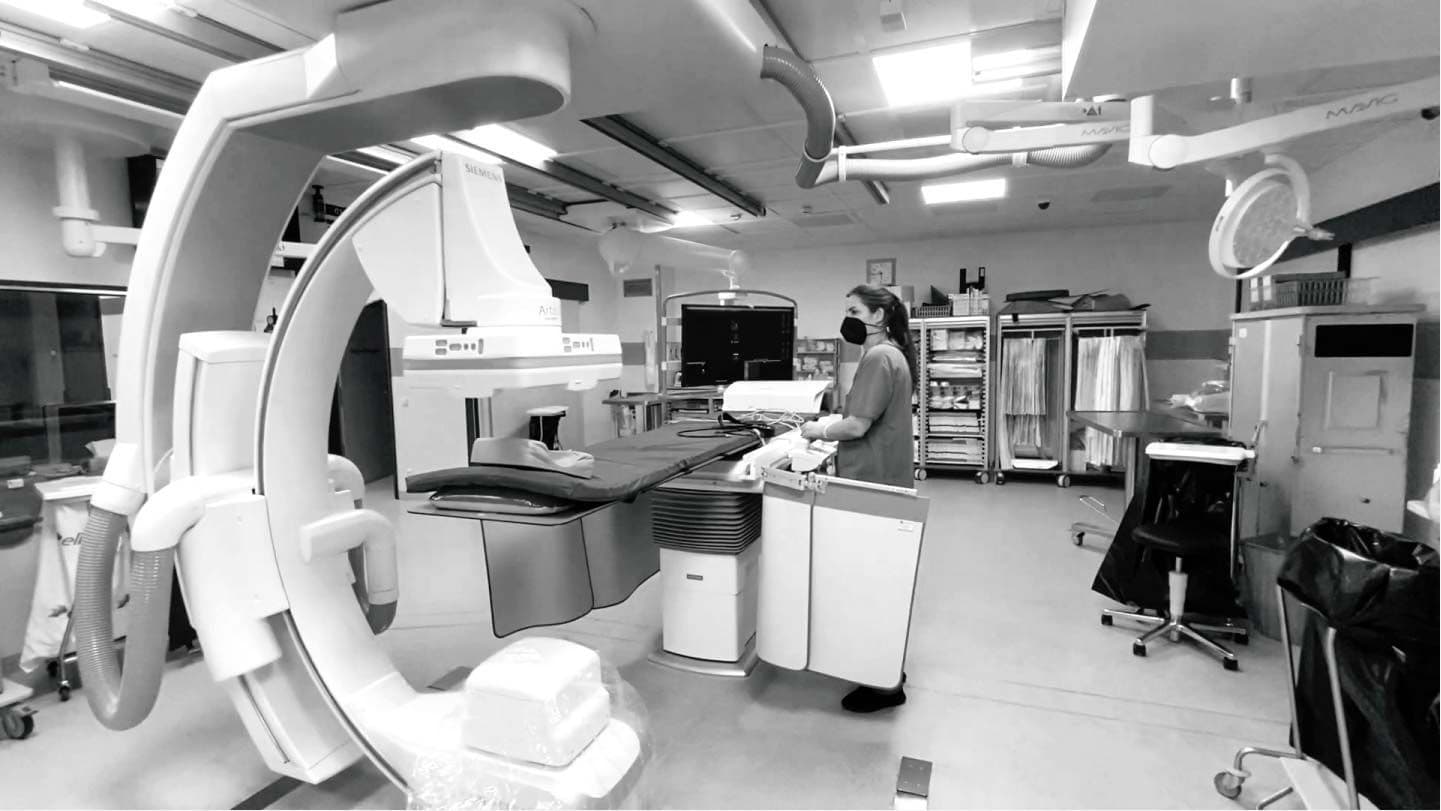
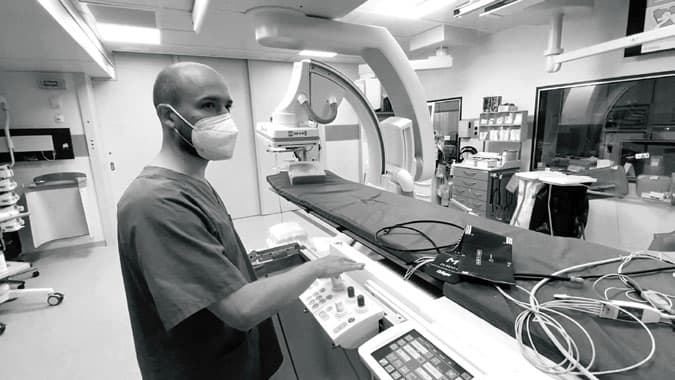
Medical software, digital health applications, and connected medical devices such as angiography systems, CT scanners, or ultrasound devices are used under time pressure, in safety-critical situations, and by highly diverse user groups. In this context, unclear interactions do not only lead to frustration, but also to misoperation, delays, and risks. UX in medical technology means designing complex technologies in a way that they function in real-world usage contexts—clearly, safely, and efficiently. In addition, user-centered UX helps identify real problems faced by medical users and generates new innovation impulses for products.
Challenges for UX in medical technology and healthcare
Compared to consumer products, User Experience (UX) in medical technology is subject to fundamentally different conditions. Medical products and digital applications are often characterized by high system complexity and a correspondingly high cognitive load. They are used in time-critical clinical environments, often under significant pressure.
At the same time, very different user groups—ranging from physicians and nursing staff to service technicians and patients—must be able to work with the same systems safely and efficiently. On top of that, strict regulatory requirements apply, such as MDR or standards like IEC 62366 in the context of Human Factors Engineering.
All of these factors result in exceptionally high demands on patient safety and consistent risk minimization.
Value of UX
Consistently integrating User Experience (UX) into product development has a measurable impact on product success. UX thus becomes a key lever for quality, safety, and market performance—especially in complex and regulated environments.
Clear and simplified interactions make clinical workflows more efficient, increasing acceptance and actual usage among healthcare professionals. At the same time, training and support efforts decrease because products are more intuitive and easier to understand, reducing user errors.
This directly contributes to improved patient safety and enables more informed product decisions that sustainably increase both customer value and business value.

Process
Effective UX follows a structured, evidence-based approach.
1. Understanding real-world use
Through user research in clinical environments (observations, interviews, workflow analyses), real problems, risks, and needs are identified.
2. Guiding product decisions
A UX strategy connects user needs, business goals, and technical feasibility. This enables solutions that are desirable, feasible, and economically viable—while also meeting regulatory requirements.
3. Making complexity manageable
Insights are translated into interaction concepts, information architectures, and prototypes that make complex workflows understandable and safe.
4. Reducing risk early
Iterative testing with real users provides reliable decision-making input, reduces development risks, and supports regulatory validation.
use case
A practical example from oncology: how UX improves clinical workflows
A case from oncology shows how UX issues can affect everyday clinical practice: physicians must consider a large amount of information when making treatment decisions—imaging data, lab results, therapy history, tumor parameters, and patient data from the hospital information system.
In practice, however, this information was distributed across different areas of the software, forcing users to constantly switch between multiple screens during decision-making. Especially under time pressure, this created increased cognitive load and disrupted the actual decision process.
As part of UX research and workflow analysis, we examined how clinical decision-making actually takes place and which information is needed at each step. Based on these insights, prototypes were developed that bring relevant data together directly within the decision workflow.
The technical functionality remained unchanged—but the structure of the information became clearer and more coherent. For users, this meant fewer context switches, faster orientation, and a significantly smoother decision-making process.
This example shows that UX in medical technology is not just about designing interfaces, but about translating complex technologies into functional clinical workflows.
If you recognize similar challenges in your products, the UX Quick Guide helps you systematically identify and address common UX pitfalls.
About the author
Jona Rammler is a UX consultant and founder of Splore.
He supports companies in HealthTech and industry in translating complex technologies into intuitive, user-centered products.
FREE DOWNLOAD
Quick Guide: UX Under Pressure
Quick Guide: UX Under Pressure
Identify 5 typical UX challenges in MedTech and act on them immediately—create clarity before things become expensive or slow.
Not sure where to start?
Free Consultation
Free Consultation
In 30 minutes, we’ll identify together which of our services can create the greatest impact for your current situation.
More Articles
More Articles
