Developing a UX Product Vision — from idea to a robust strategic target vision
Developing a UX Product Vision — from idea to a robust strategic target vision

A UX product vision is a strategic tool that translates user needs, market opportunities, and business objectives into a concrete target state. It is derived from systematic customer research and translated through UX design work into tangible concepts and solutions. The result: a shared direction for development, design, and management, enabling better decision-making and reducing the risk of misguided developments.
Why a product vision is more than a slide
Many companies have a product vision. It sits on slide three of the quarterly presentation, and everyone nods. The problem: these visions are rarely based on what customers actually need. They are shaped by internal assumptions, market observations, and what leadership believes to be right.
A UX product vision works differently. It does not start with a solution, but with the question: What do your customers really want? And: Are we even solving the right problem?
At its core, a product vision consists of concepts that improve a product over the next 5 to 10 years. These are inspired by user research and together form a picture of the future. Not an abstract strategy paper, but a concrete target state that can align teams.
When UX is used strategically from the beginning, it does not only result in a better product, but often in a fully developed product strategy. At Splore, we have seen in projects that the UX vision was adopted by product management as the actual product vision. Not because that was the initial intention, but because UX work surfaced things that were previously invisible: unmet customer needs, new value propositions, and concrete market opportunities.
What a UX product vision delivers
A product vision from a UX perspective answers three questions:
1. What do your customers really want?
Discovery and research form the starting point. Before any concept is created, there must be clarity about which problems customers actually have—not the ones the company assumes they have. This sounds obvious, but in practice it rarely is. Teams deeply embedded in daily operations lose sight of how the market is changing. Internal assumptions solidify, and no one questions them anymore.
This is where the real value of external UX work lies: the ability to systematically challenge assumptions. At the beginning of a project, in the middle, and at the end. Are we building the right thing? Are we going off track? Which problems are we truly solving?
“You actually have this capability of constantly questioning things” — Jona Rammler, EP 02
This questioning capability is not abstract. It means: we talk to your customers, observe real usage situations, and confront internal assumptions with what we find. The results are often uncomfortable, but they prevent months of investment into solutions that miss the market.
2. Where is the untapped potential?
The most valuable innovation impulses rarely come from the center of a target group. They come from the edges: extreme users who push products to their limits and whose behavior reveals needs that later become relevant for the broader market.
In UX research, this is called the inverted perspective: Who is not using your product today, and why? What happens when you deliberately speak to people who have consciously decided against your product? The answers are often more insightful than any satisfaction survey.
This principle is especially relevant for companies expanding their portfolio or entering new business areas. Exploratory research methods such as Greenfield Research specifically target this space: systematically uncovering unmet needs that remain invisible with conventional methods. This work does not only lead to product improvements, but also to concrete ideas for new offerings.
3. Can the value be quantified?
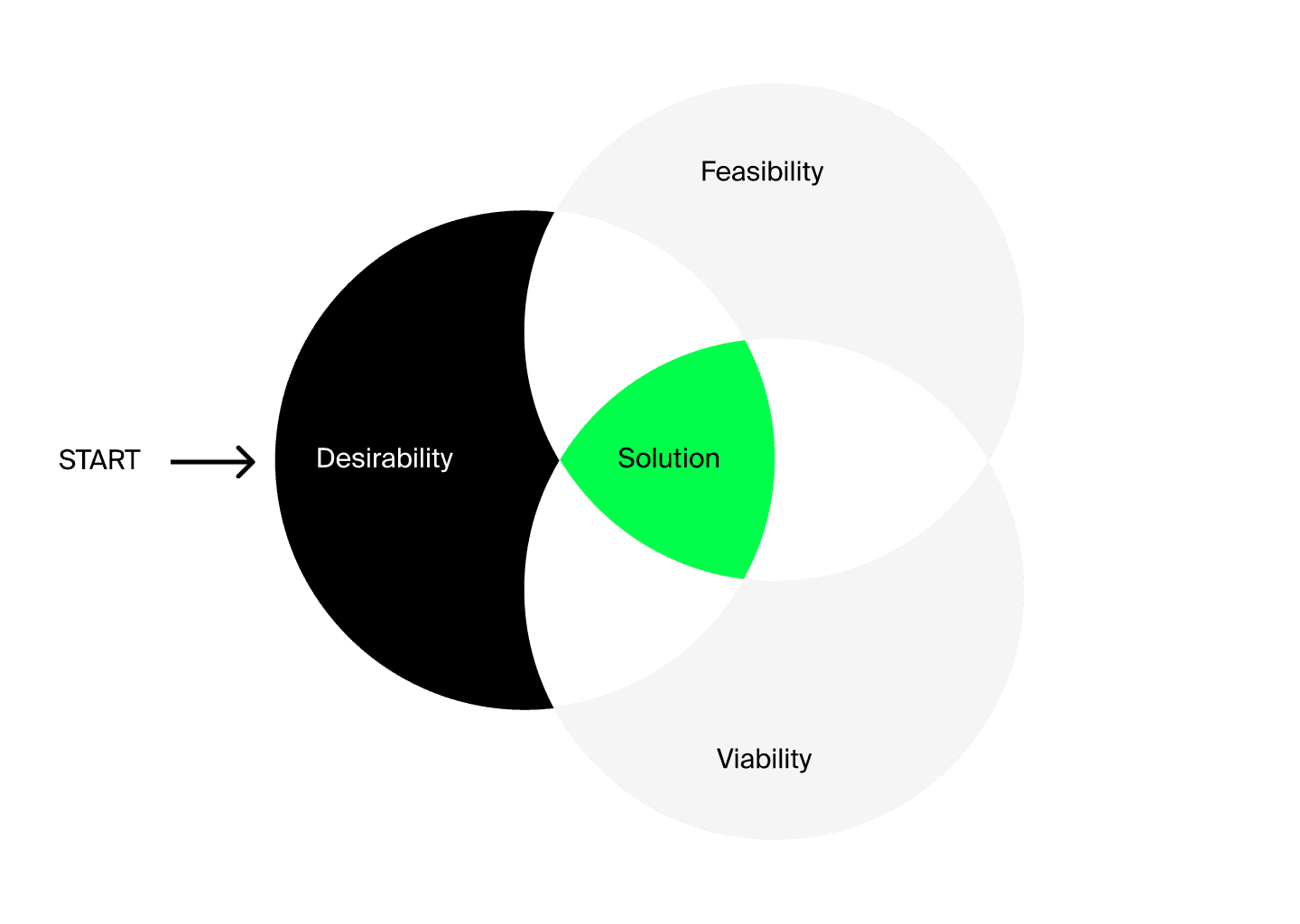
A product vision that only inspires remains without consequence. That is why we start with a central question: Does it solve a real problem and is it desirable? Only then do we consider business viability and technical feasibility. This order is intentional, because only what is desirable can be meaningfully evaluated.
This breakthrough model (Desirability → Feasibility → Viability) ensures that the internal business case does not drive direction, but actual customer need does.
UX processes reduce development risk by generating knowledge early. Instead of discovering at the end of a long development cycle that the product misses customer needs, a UX-driven process creates this clarity within the first weeks.
“De-risking development means reducing risk” — Jona Rammler, EP 02
For CFOs and decision-makers, this translates directly into euros: avoided failed developments, reduced iteration cycles, faster time to market based on validated insights.
Three levels of UX value creation
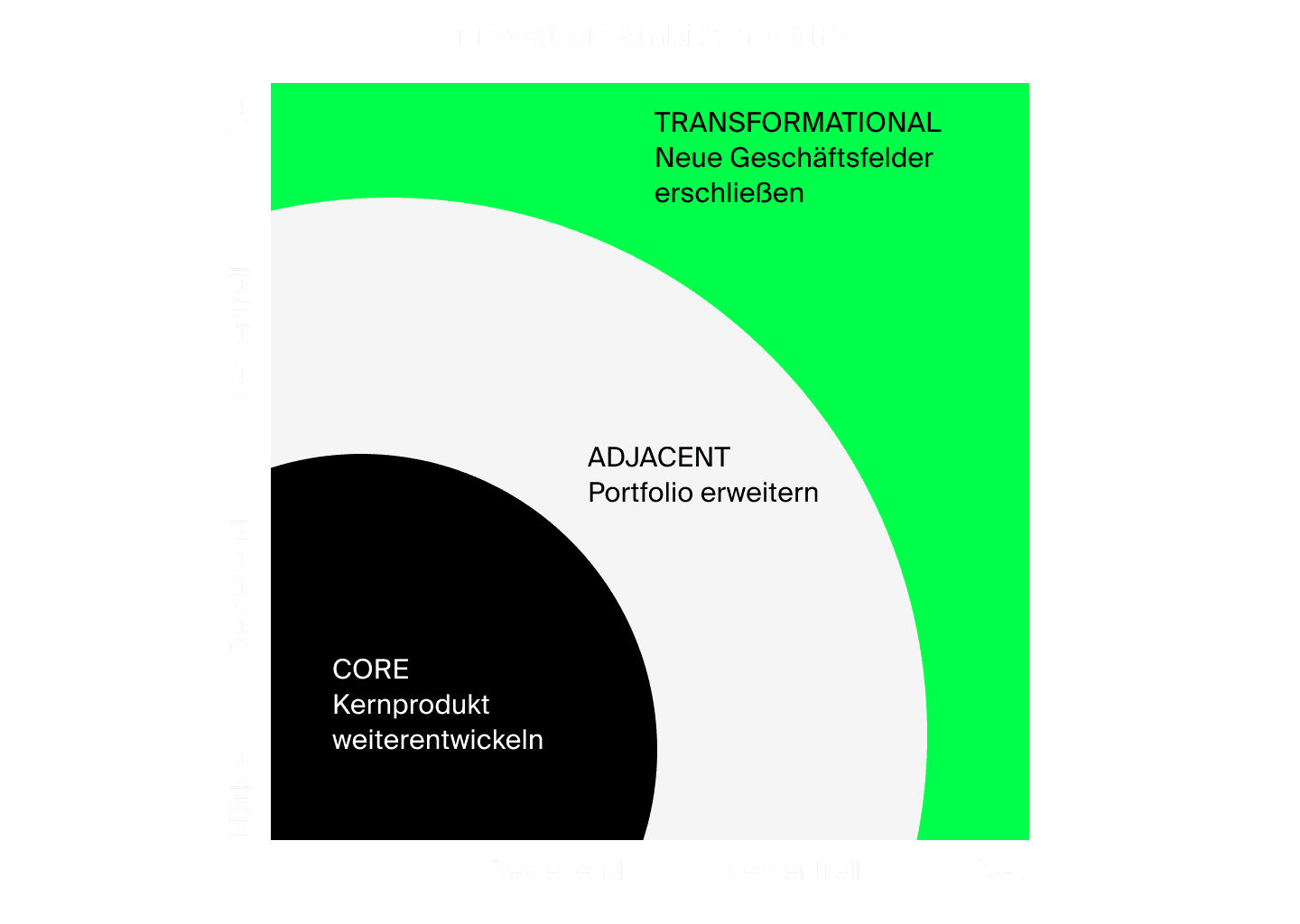
UX can operate on different levels depending on the ambition of the organization:
Level 1: Evolving the core product
An existing product is optimized. Usability issues are resolved, workflows are simplified, and the user experience is improved. Often this also raises the question: what does the future of my domain look like? For example in ultrasound: how should I position my capabilities? What do customers truly want, and what solves real clinical or operational problems? This is the most common entry point and delivers fast, visible results.
Level 2: Expanding the portfolio
UX research reveals that existing customers have needs not covered by the current offering. This leads to new products or services built on the existing customer base.
Level 3: Entering new business fields
The most ambitious step: exploratory research identifies market opportunities that were previously invisible. Here we use methods such as Greenfield Research—qualitative exploration in user groups you are not serving today. This can result in entirely new product lines.
The strategic impact of UX depends on the ambition of the client. Those who use UX only for workflow optimization will get workflow optimization. Those willing to challenge their product strategy receive a solid foundation for decisions that shape the company for years to come.
Designing the Right Thing — not Things Right
In product development, there is a distinction many teams are not fully aware of: building the right thing versus building things right. Most resources go into the latter: execution quality, QA, technical excellence. This is important. But it does not help if the underlying concept is wrong.
A UX product vision ensures that the right thing is identified first. That teams do not get lost refining a solution nobody needs. In practice, this means: before designing an interface or defining an architecture, hypotheses are tested—with real users, in real contexts.
“Designing the right thing basically means they can also build a rough prototype” — Jona Rammler, EP 02
This principle is most visible in startups: teams that start with a clear problem and validate iteratively with customers reach viable products faster than teams working from extensive requirements documents and long development cycles. Established companies can also adopt this approach if they are willing to open up their process.
.png&w=3840&q=75)
The external perspective
Why is an external partner needed for this? Because internal teams, no matter how competent, operate within an organizational logic that creates blind spots. Working in the same context every day gradually reduces the ability to question underlying assumptions—not out of negligence, but because operational pressure suppresses reflection.
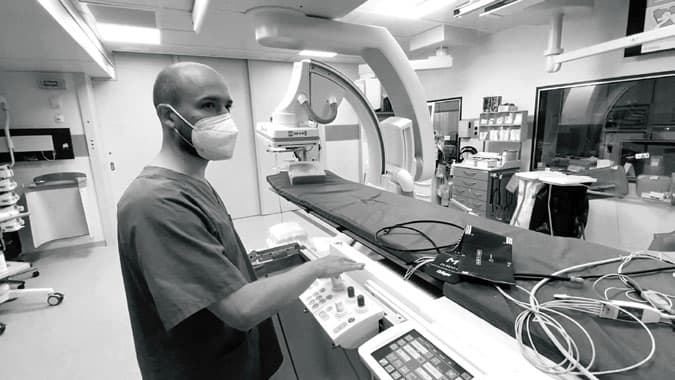
An external UX perspective breaks this pattern—not through provocation, but through method: systematic user research, structured interviews, and observation in real usage contexts. This also means stepping into the user’s environment. Something other departments rarely do. Whether during a site visit in a hospital in the US, observing clinical workflows, or conducting interviews directly in context.
The results reveal where assumptions diverge from reality. It is precisely in this gap between assumption and reality that the strongest innovation impulses emerge.
At the same time, external UX work is not a replacement for internal expertise. The best results come from combining both. Internal teams understand the organization, decision paths, and history. External partners bring the questions that were never asked or answered internally. This combination makes the difference.
How we work
A UX product vision at Splore is developed through a structured process:
Discovery
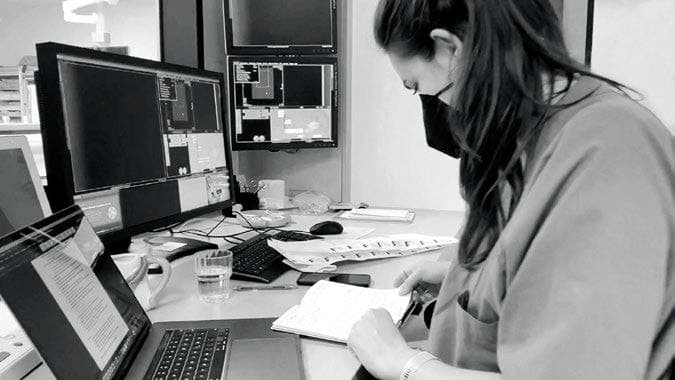
We understand your business model, target groups, and the status quo. Stakeholder interviews and user research run in parallel, including on-site. We put ourselves in the users' shoes, observe real processes, and conduct interviews in the usage context. This results in the right questions.
Research & Synthesis
Qualitative and quantitative insights are combined. We identify patterns, validate or refute hypotheses, and highlight the key opportunities. In some projects, we additionally test concepts in a quantitative study. The quantifiable results then serve as a direct basis for management decisions.
UX Design & Prototyping
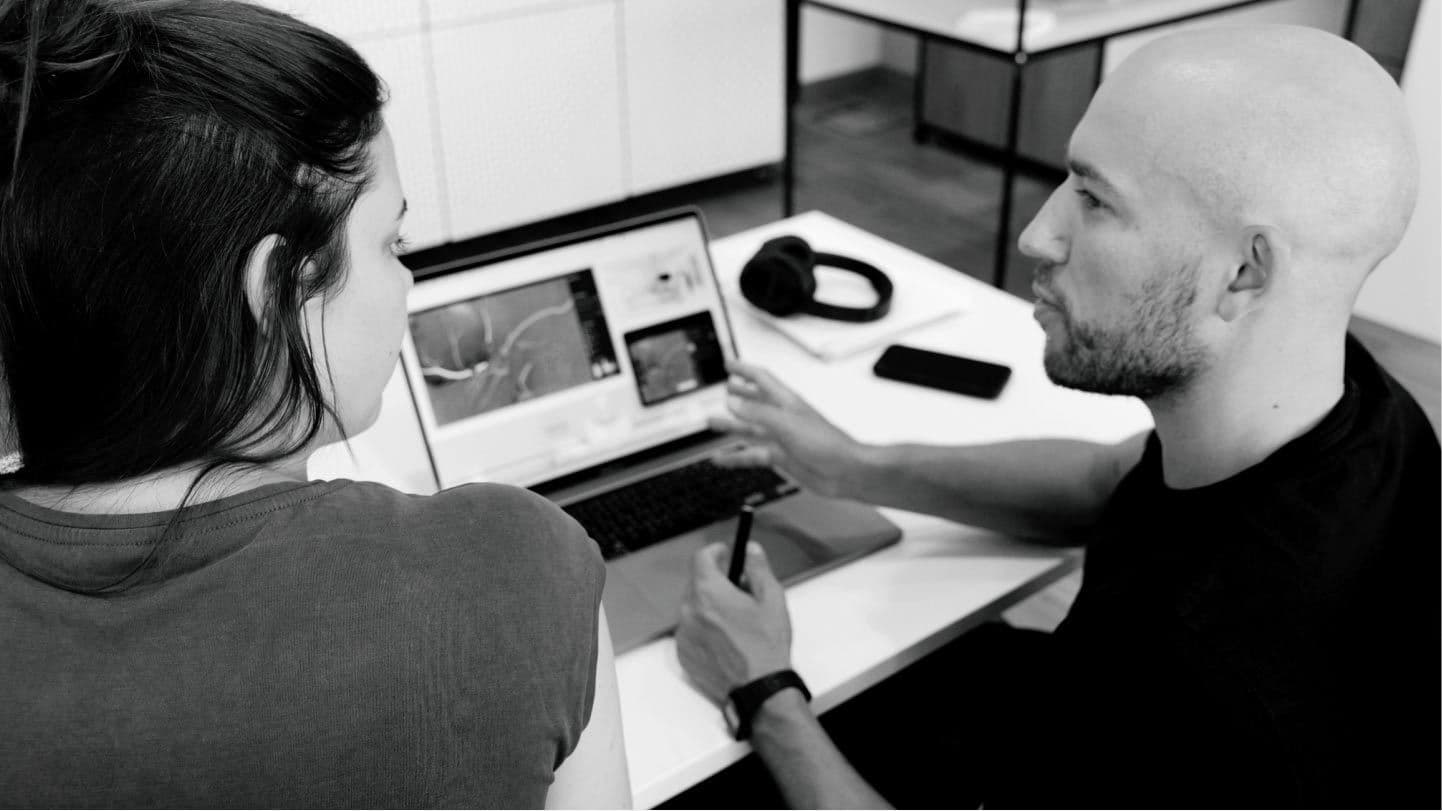
Concrete solutions emerge from the research results. We go through the complete design process and design solutions as if we were implementing them today. What sets Splore apart: Even during user interviews, we work with concept sketches as stimuli. In the Create phase, complete UX designs are rendered in the usage context. The client receives UX design of their future products, so concrete that teams can provide feedback, stakeholders can discuss it in advisory boards, and development teams can unite behind a common vision.
Vision & Strategy
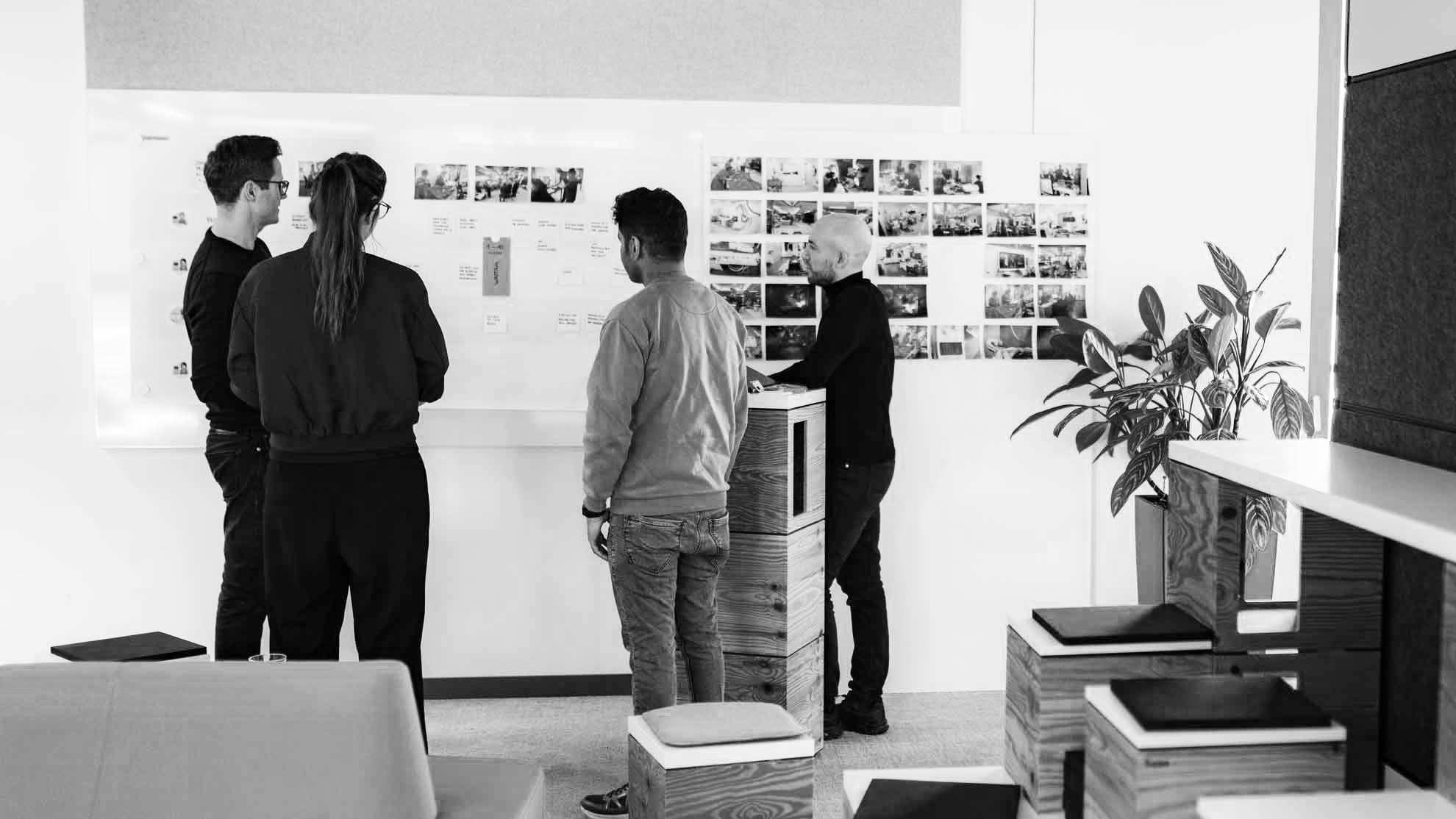
From the insights and designs, a concrete target image with priorities, a basis for argumentation, and reliable decision-making foundations is created. The result: a presentation with clear corporate ambition, research insights, concepts for improvement and innovation, translated into concrete design solutions and tangible user experiences, plus test results and validation.
Handover & Continuation
The vision is prepared so that your team can continue working with it. This can be a workshop format, a documented strategy, a film for internal marketing, or accompanying UX-Sparring over several months.
Who is a UX product vision for?
Especially in regulated industries such as medical technology and in companies with physical products and long development cycles, a solid product vision is critical. In these environments, misdirected developments cannot be corrected with a quick update. What is wrongly designed can remain in the market for years.
Product teams
Product teams that feel their product has grown but lacks direction
Product managers
Product managers who want to know what customers really want, not what sales colleagues think
Department heads
Department heads who are responsible for an entire unit and book a UX team for several months to develop their vision
Executive management
Executive management looking to explore new business areas and need a solid foundation
Innovation departments
Innovation departments that want to go beyond initial ideation workshops
Companies
Companies facing a technology change, questioning whether the existing concept is still viable or if it's time for a new approach
FAQ
A UX product vision is a strategic target vision based on systematic user research. It makes the future solution tangible by illustrating the intended user experience and the solutions that support it. It takes a holistic approach, from which individual features can later be derived. Unlike technical roadmaps or feature lists, a UX product vision places customer value at the center.
A traditional product strategy is often based on market analysis, competitive benchmarking, and internal business objectives. A UX product vision complements this perspective with systematic customer research: real user needs, observed behaviors, and validated hypotheses. Combining both perspectives leads to more informed decision-making.
UX processes create early insights into what customers truly need. Through qualitative research and iterative testing, potential missteps are identified before significant costs are incurred. Jona Rammler describes this effect as “derisking development”: reducing risk through early validation.
The effort depends on scope and complexity. In startups, a focused process can take around three months. For large, complex products such as medical devices, we typically expect approximately six months. Fast sprints can serve as an initial starting point, but research, implementation, and strategy require time to achieve robust results. The key question is not the duration, but rather: what is the cost of developing a product without a well-founded vision?
Questioning competence describes the ability to systematically examine assumptions, not only at the beginning of a project, but continuously throughout the process. In UX work, this means regularly checking whether the team is still solving the right problem. This term was coined by Jona Rammler and describes a core value of external UX consulting.
“Designing the right thing” means first determining whether you are solving the right problem before investing in perfect execution. In contrast, “designing things right” focuses on the optimal execution of an already defined solution. Innovation primarily happens in “the right thing,” meaning in defining the correct problem.

Have Questions?
Have Questions?
Get in touch without obligation. Splore founder Jona Rammler is an expert in developing digital products and services.